

Which one do you believe?
Theories
The Alaska Triangle is a sublime mystery of disappearing people, surrounded by multiple myths, ranging from the believable to the outrageous. Three theories have become well known; one of these is the Kushtaka, a native shape-shifting legend that lures its victims by mimicking familiar sounds. Another theory involves an energy vortex capable of disrupting time, space, and even the mentality of those affected. So, between the three, what seems to be the most logical and measurable would be the unpredictable and dangerous terrain, that is, the Alaska wilderness.

The Kushtaka
One legend surrounding the Alaska Triangle is the Kushtaka, or Kóoshdaa Káa, a shapeshifting legend that lures its victims never to be seen again (Dihle 1). An article written by Bjorn Dihle states:
Growing up in Southeast Alaska, I’d heard stories of the Kóoshdaa Káa being a furry monster that could shapeshift into the form of a loved one or play tricks like mimicking the sound of a crying baby to lure you into the woods or out to sea. Once captured, its victim would become a Kóoshdaa Káa as well. The Tlingit used to believe anyone who went missing at sea or in the forest likely became a Kóoshdaa Káa. (Dihle 2)
It’s easy to become skeptical of the theory. Some search with the intent of finding the creature themselves, but most leave with the regret of going at all. In accounts of seeing the Kushtaka and living to talk about it while fearing for their lives, some have reportedly gone insane, while others have simply disappeared (Dihle 3).

Energy Vortexes
Another persistent legend among the theories is an enormous energy source, responsible for significant psychological effects, disrupting navigation systems, and rendering airborne vehicles inoperable. Scott Hobbs, a writer for The Northern Light, stated, “The Dark Pyramid is one of a list of locations known to have an energy vortex, meaning the area is plagued by electromagnetic anomalies. In these areas, human disappearances are caused by mysterious phenomena that scientists dismiss as natural occurrences” (Hobbs 1). This could explain why a well-trained and experienced hiker would suddenly take off into the wilderness, completely unprepared, never to be seen again, or why a pilot would lose control of his plane and crash.

Unpredictable Terrain
Finally, the most believed and studied theory, the Alaska terrain, is beautiful yet brutal and unforgiving. In Hunting History with Steven Rinella, the man himself considers how Alaska’s extraordinary nature could have played a part in the Alaska Triangle story. Indeed, by scaling down a glacier: ‘he sees how it could easily engulf travelers all by itself — no supernatural input needed!” Stating “it’s not ‘supernatural’, it’s ‘super nature’…In my view, it’s not ‘The Alaska Triangle’, it’s just Alaska’ (Rinella 1). Spanning 663,000 square miles, it includes North America’s tallest mountain, active volcanoes, two immense national forests, and over 100,000 glaciers (Rinella 2). Unpredictable weather and predators, the danger to humans are easy to imagine. These factors tip the scales of how dangerous life in Alaska truly is.
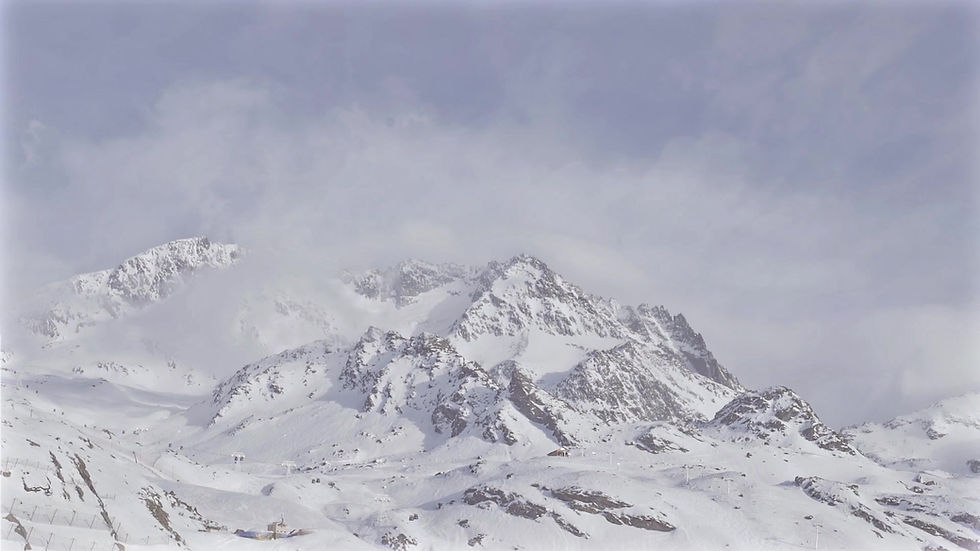
Today, the disappearances and theories surrounding them continue. While technology may eventually turn a key in discovering the truth and uncovering the many victims of the Alaska Triangle, the most believable explanation remains that the enormous terrain and severe weather changes are truly responsible for these tragedies.